
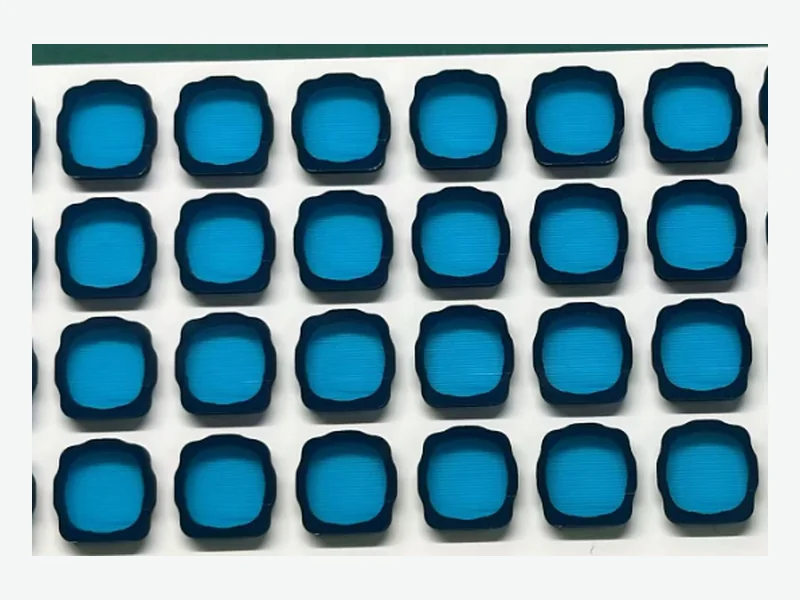
Camera, gimbal and LiDAR interfaces must balance cushioning, positional stability and assembly tolerance. Foam selection becomes meaningful only when the module mass, support geometry, compression, recovery and environment are considered together.
Define what the foam must control
Clarify whether the part is intended to prevent rattle, absorb an assembly tolerance, cushion shock, isolate a vibration path, protect an optical window or create a light and dust barrier. One foam part may serve several functions, but the priorities must be explicit.
Record sensitive axes, allowable movement and alignment requirements. A soft construction that reduces contact force can still be unsuitable if it permits excessive module motion.
- Module mass and center of mass
- Sensitive direction or alignment
- Available support area
- Maximum permitted movement
Specify the installed strain
Use the housing gap and tolerance stack to determine the compression range across production. Review compression force-deflection, recovery and long-term deformation for the intended temperature and duty cycle when the selected grade provides that data.
Avoid assigning one universal foam thickness without considering local ribs, screw loads, adhesive thickness and housing distortion.
Include environment and surface conditions
Temperature, humidity, dust, water exposure, cleaning fluids and outdoor contaminants may change the material or adhesive choice. The bonding surface, surface energy, texture and application method should be reviewed with the foam itself.
Where airflow or acoustic transmission is involved, the opening and pressure-drop requirements may point to a mesh or vent membrane construction rather than closed foam.
- Operating and storage environment
- Substrate and surface finish
- Adhesive dwell and assembly process
- Dust, water, airflow or acoustic requirement
Validate with the complete module
Prototype die-cut parts can confirm placement, liner handling, compression and clearances. Final vibration, shock, optical alignment and environmental performance must be evaluated in the complete customer assembly under intended conditions.
What to send for a useful review
- Module and housing drawing
- Mass and sensitive axes
- Gap and compression range
- Motion or vibration target
- Environment and substrate
- Prototype and annual volume